Tesla's New Plan: Building Its Own Road Maps
The automaker is now developing its own navigational data to address persistent issues with its self-driving technology.
By Gabriela Flores ·
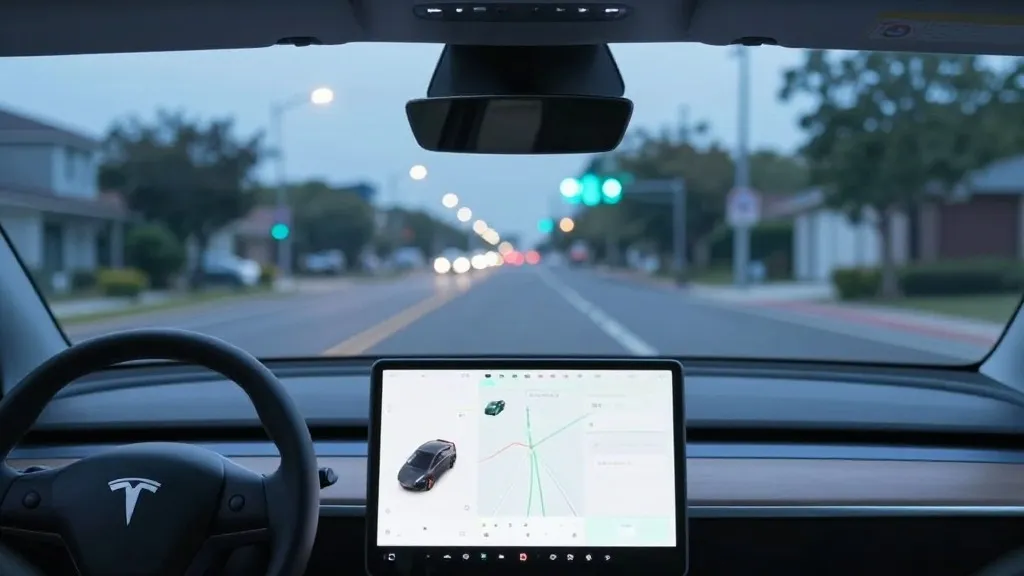
Tesla is now constructing its own map data to address persistent shortcomings in its Full Self-Driving system, a move that marks a significant departure from years of public statements dismissing the utility of such tools. The company’s head of AI outlined the initiative on Tesla’s Q3 2026 earnings call, stating that the automaker is building proprietary maps to rectify common failures regarding speed limit adherence, parking maneuvers, and route selection.
The pivot represents a stark contrast to the company's long-held public stance. Historically, the automaker has argued that relying on high-precision maps renders self-driving systems brittle and inflexible. In 2019, for instance, the company described attempts at high-precision lane mapping as a 'huge mistake' and a 'really bad idea,' explicitly contrasting this approach with competitors who utilize lidar and detailed maps to navigate. The company's current trajectory suggests a shift toward the very methodology it once criticized.
During a shareholder question-and-answer session, the inquiry regarding mapping was raised by an investor who listed speed limits, parking, and typical routes as primary areas where the technology continues to struggle. The investor questioned why the system relies on third-party data rather than internal sources. In response, the company's VP of AI, Ashok Elluswamy, conceded that 'we shouldn't be depending on external people’s maps,' confirming the development of a new AI-based mapping and navigation architecture.
The company's history with mapping technology has been inconsistent. In 2015, the firm told Fortune it had begun building high-precision maps with '100 times the level of granularity' of standard navigation using data from customer cars. However, by 2019, the CEO stated that relying on high-precision maps was 'extremely brittle,' a sentiment echoed in the same presentation where he called lidar a 'fool’s errand.' The message conveyed at the time was that competitors needed detailed maps and sensors, while this automaker would solve driving with cameras and AI alone.
Seven years later, the company is building a map layer from its own fleet to address environmental understanding, specifically regarding speed limits and routes. Recent data highlights the necessity of this fix; last month, a Belgian road safety group found that the system exceeded speed limits in 55% of the 30 km/h zones tested in Brussels, with the vehicle’s screen displaying 50 km/h in most of those instances. In the United States, regulators are currently weighing an investigation into claims that vehicles are speeding through active school zones.
This development brings the automaker’s methodology closer to that of its primary competitor. Waymo maps a city by driving sensor-equipped vehicles through it before launching service and updating those maps continuously. The automaker is now describing a similar process: its cars collect environmental data, which feeds a proprietary map intended to assist all vehicles. The primary distinction remains that the competitor's vehicles are equipped with lidar sensors, whereas this company’s vehicles rely on cameras.
There is nothing inherently incorrect about utilizing maps, and a map constructed from millions of vehicles could offer a significant advantage if it resolves speed limit issues. However, the years of messaging regarding the rejection of maps and geofencing have created a conflict with the current operational reality. While the competitor has operated driverless services for years using pre-built maps, this automaker is building its maps now and has pushed unsupervised FSD in customer cars to Q2 2027, and only inside its Robotaxi fleet.
Source: Electrek