Apple's 25-Year Legacy: The Original iPod Redefined Personal Music
A quarter-century after its 2001 debut, the device that fit a thousand songs into a pocket-sized player continues to influence how consumers access digital media.
By Chinedu Okafor ·
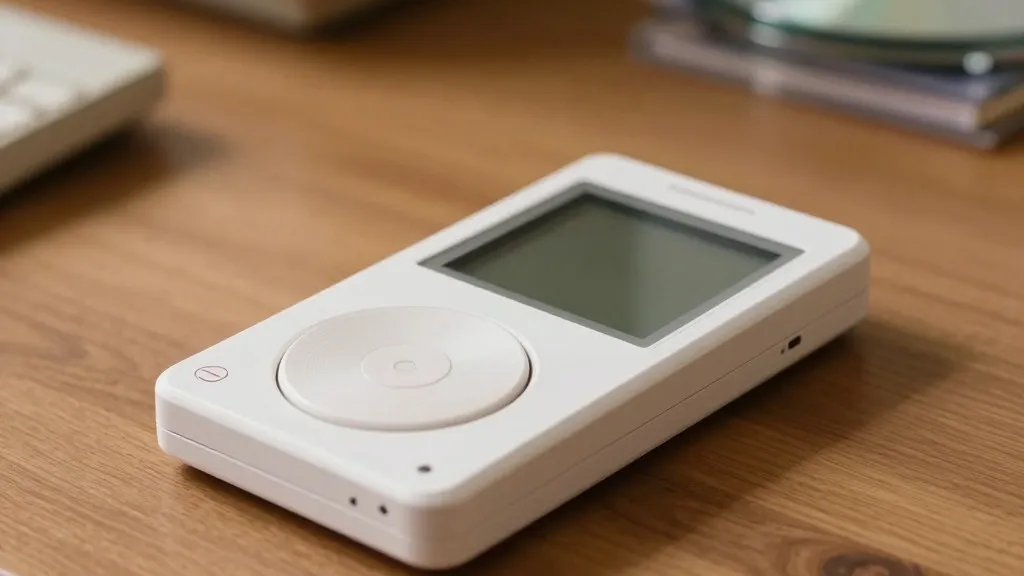
Apple CEO Steve Jobs formally introduced the original iPod on this day in 2001, marking the beginning of a significant shift in consumer electronics. He opened the presentation by announcing a breakthrough digital device that was not a Mac, ultimately revealing a pocket-sized player that became a cultural phenomenon. The product launched with the bold promise of allowing users to carry their entire music library in their pockets for a price of $399.
At the time of its release, Apple had successfully navigated the company through the post-dot-com bubble era. The brand was well established with the success of the iBook and iMac lines. Jobs envisioned the Mac as the central hub for a user's digital lifestyle, connecting various devices such as cameras and DVD players. He identified portable music as a high-value market that lacked a clear leader, despite the presence of competitors like Sony, Creative, and Sonic Blue.
Jobs argued that existing players had not yet found the correct formula for digital music. He selected a hard disk-based approach over flash memory or CD formats to maximize storage. The resulting device offered CD-quality sound and supported popular formats including MP3, WAV, and AIFF. Its 5-gigabyte capacity allowed it to store approximately 1,000 songs, which Jobs described as the entire music library for most people.
The physical design was a key differentiator, utilizing a 1.8-inch hard drive manufactured by Toshiba. This component enabled the device to be the size of a deck of cards, measuring 2.4 by 4 by 0.78 inches and weighing 6.5 ounces. Jobs emphasized that the player was lighter than most cell phones of that era. It featured 20-minute skip protection and used a FireWire 400 cable for both power and data transfer, a connection he claimed was significantly faster than standard USB interfaces.
The user interface was designed for ease of use with a single hand. A scroll wheel with tactile feedback allowed for quick navigation by artist, playlist, or song. During the demonstration, Jobs played Building a Mystery by Sarah McLachlan. The device also included a rechargeable lithium-polymer battery that provided 10 hours of continuous playback and could recharge to 80 percent in one hour.
Integration with Apple's software ecosystem was the final major advantage. The release coincided with the launch of iTunes 2, which supported MP3 CD burning and automatic synchronization. This feature ensured that music libraries curated on a Mac would always match the content on the portable player. The iPod also functioned as a FireWire hard disk drive when connected to a computer.
The first iPhone arrived in early 2007, leading to a period where both devices coexisted in Apple's product lineup. The influence of the iPod gradually declined as smartphones matured, and the final model, the 7th-generation iPod Touch, was released in May 2019. Apple officially discontinued the product line in May 2022, concluding a run that spanned over two decades.
Source: Tom's Hardware